
A Green Light to Save the Studenchishta marshes
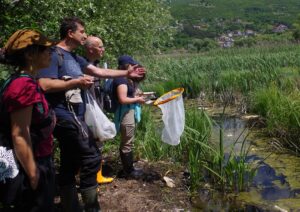
The Alliance team of experts organized a 3-day field trip uniting the North Macedonia’s Ministry of Environment, the Macedonian Ecological Society, local representatives and scientific experts to plan the protection and restoration of the Studenchishta marshes.
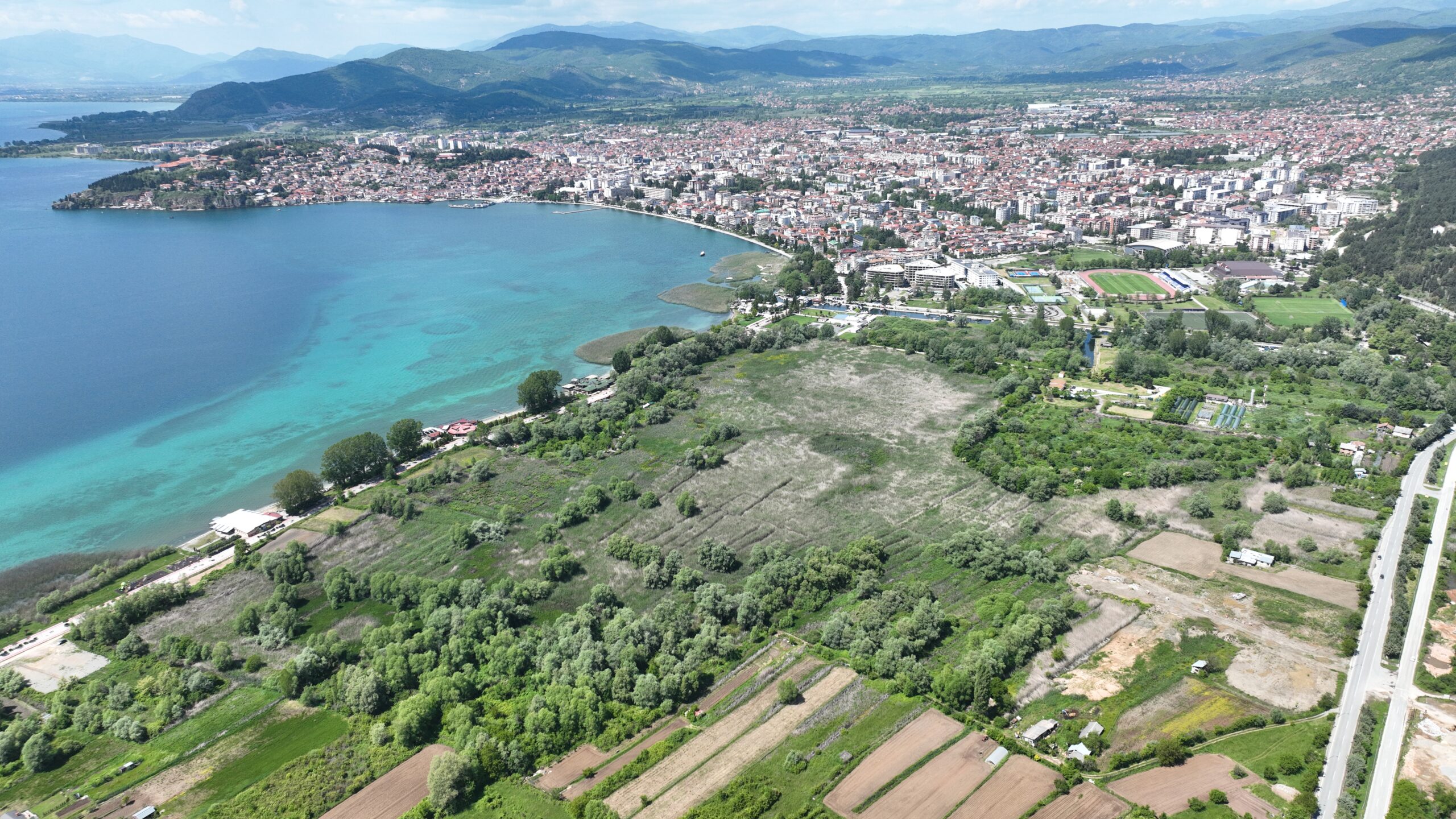
 On the shores of Lake Ohrid, one of Europe’s oldest and the world’s most biodiverse lakes, a fragile wetland is struggling to survive. This unique wetland has been severely degraded by drainage, tourism related infrastructure development, and pollution, threatening its ecological integrity and long-term viability.
To stop the degradation of this precious wetland, the Green Light team from Tour du Valat visited the site in May with support from the AFD-funded project PROZHUM. The team included the Macedonian Ecological Society, wetland experts from the Mediterranean Alliance for Wetlands from Tour du Valat, international wetland restoration experts, and government representatives, all meeting in Ohrid to discuss the future of the Studenchishta Marsh.
The mission helped to understand how the site could be restored, using the support of experts from the Mediterranean Alliance for Wetlands to design a common vision and concept note. The objective is to transform the degraded marshes into a thriving ecosystem that benefits both nature and local communities, while ideally securing protected status through the Prespa Ohrid Nature Trust (PONT).
Discussions began with representatives from North Macedonia’s Ministry of Environment and Physical Planning, the country’s Ramsar Convention focal point, scientific experts and international partners. Participants agreed that revitalizing the site’s protected status will contribute actively towards its recovery, opening the door to national and international funding and providing a stronger legal basis for long-term conservation.
Local representatives then came together in a workshop to develop a shared vision for the future of Studenchishta. Their aspiration is to create a wetland that is not only protected, ecologically functional, and resilient, but also a thriving habitat for biodiversity, a place where visitors can reconnect with nature, and a landscape in which local communities play an active role in its stewardship. To better understand the values of the marshes and their ecosystem services, participants also carried out a Rapid Assessment for Wetlands Ecosystem Services (RAWES). The exercise highlighted the site’s considerable potential to support environmental education and nature-based tourism.
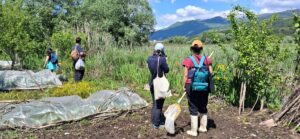 Two field site visits to the Studenshishta marshes revealed the urgency and the scale of the challenge ahead. Large areas have been drained for agricultural use, while illegal dumping and scattered waste continue to degrade the habitat. The extent of the damage, with a notable presence of waste and dumped sites, left the Green Light team concerned but also reinforced the need for coordinated action. Further discussions about the possibility of expanding the protected area and involving a neighboring power plant are underway to strengthen future conservation efforts.
The coming months will focus on turning ideas into actions. Next steps include the development of restoration scenarios with landscape architects, the preparation of a report incorporating elements of the Conservation Standards into the Green Light protocol, the creation of public awareness materials and the identification of potential funding partners.
Learn more about the Green Light initiative and its restoration sites at: https://medallianceforwetlands.org/our-actions-to-protect-wetlands-rivers/
